Where the Mountains Pray: A Day at Tawang Monastery
Experience the serene grandeur of Tawang Monastery, where chants ride the mountain wind and devotion lives in everyday moments. A reflective journey into Arunachal Pradesh’s spiritual heart.
ARUNACHAL PRADESHCULTURE & HERITAGEFEATURED STORIES
6/20/20252 min read
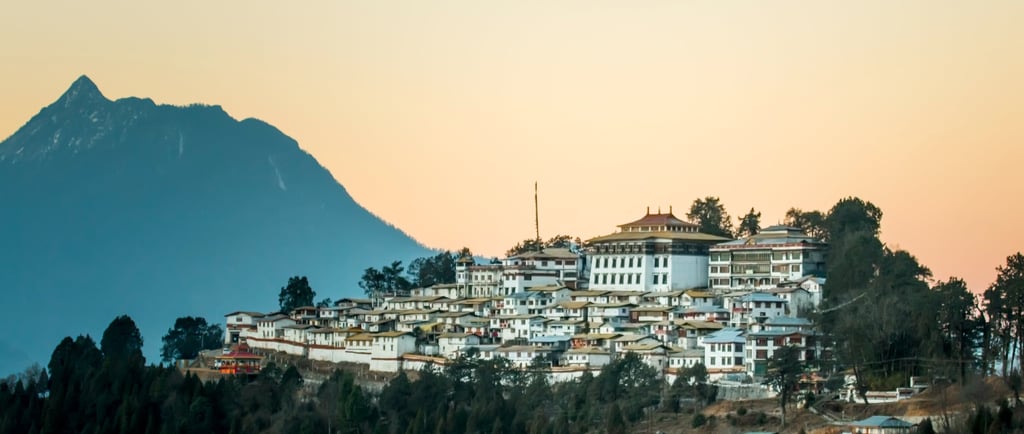
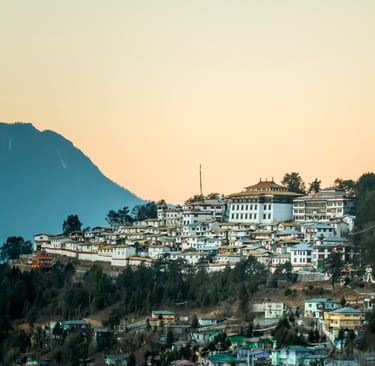
At 10,000 feet above sea level, the wind doesn’t whisper. It chants. The morning I arrived at Tawang Monastery, it was carrying something deeper than cold—the low, rolling murmur of monks at prayer. The air had a thickness to it, not just from altitude but from history.
The monastery stood like an echo of the mountains themselves: broad, layered, weather-worn, and quietly majestic. Its white walls caught the sun like skin remembering warmth, and its golden rooftops shimmered like the peaks they faced. A group of local women was tying fresh white khatas to the gate, whispering short prayers under their breath. One of them turned to me and said, "The mountain listens better than most people."
I passed under the prayer wheel arch, and the world slowed. It wasn’t just the altitude. It was the stillness. Young monks in maroon robes swept the courtyard in measured strokes, their laughter occasionally bouncing off the painted walls. Prayer flags flapped in bursts of red, blue, green, yellow, and white—messages to the wind, sent in trust. A few tourists stood silently, some taking photos, others unsure whether to whisper or stay still. Even they seemed subdued by something larger than themselves.
Inside the main prayer hall, the air smelled of yak butter lamps and centuries of incense. Gigantic thangka paintings watched from above, their eyes somehow both fierce and forgiving. Rows of low cushions held monks in meditation, their voices weaving in and out of one another in layered chant. I sat at the back, not understanding the words, but moved by the rhythm—as if each note was stitched to the land. One monk's chant cracked for a moment, and another's filled the space without pause. It felt like a living, breathing chorus.
Later, a young monk offered me tea. It was salty, made with butter, thick like memory. He told me his name was Tenzin, that he was thirteen, and had come here after his uncle brought him from a village near Dirang. "I miss home," he said, "but here, I feel part of something big. Something that doesn’t need explaining."
We walked through the monastery library, past manuscripts inked on brittle paper. A senior monk explained how the monastery was built in 1680, founded by Merag Lama Lodre Gyatso under the guidance of the fifth Dalai Lama. He pointed to a fading mural of Avalokiteshvara and said, "We are not just caretakers of faith, but memory. The walls remember more than we do."
At the rear courtyard, I met an elderly caretaker, Khandro-la, who had lived next to the monastery all her life. She offered me roasted barley and spoke about watching generations of monks pass through. "Some return as tourists. Some return in robes. But the mountain always receives them the same."
As the sun began to lower behind the distant ridges, the chants resumed. I stood by a window and watched as the valley below shifted into shadow. Somewhere, a conch blew. Somewhere else, a bell rang. The monastery didn’t seem to separate prayer from daily life. It was all folded into one—the scraping of a bowl, the brushing of a floor, the slow inhale before a verse.
I left as night fell, my steps slower, as if the ground beneath Tawang held more than stone. The wind now felt warmer. Or maybe I had changed.
Tawang Monastery doesn’t ask for belief. It asks for presence. And in return, it gives you a kind of peace that speaks with the voice of the mountains themselves.