Where Silence Holds the Line: A Morning at Kohima War Cemetery
Walk through the solemn grounds of Kohima War Cemetery, where history, sacrifice, and silence shape remembrance. A moving tribute to those who gave everything in the hills of Nagaland.
NAGALANDHISTORY
6/23/20253 min read
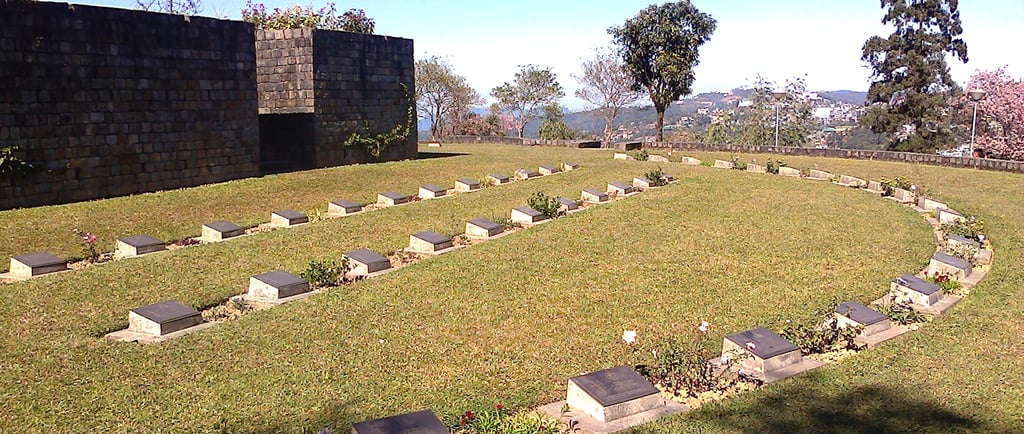
The gate wasn’t grand, but the words were. "When you go home, tell them of us and say: for your tomorrow, we gave our today." I read them twice before stepping in. That inscription, simple and solemn, felt heavier than the stone it was carved into. It held the weight of sacrifice.
The Kohima War Cemetery rests gently on the slopes of Garrison Hill, where the Battle of Kohima turned the tide of World War II in the East. The air here feels still, as though time itself has slowed to a respectful hush. There’s no grandeur. No marble columns or towering spires. Just rows upon rows of gravestones, carved with care, stretched across manicured terraces. Each one is marked with a name, a regiment, a date—and sometimes, a line of poetry that makes your throat catch.
The morning was cool. Mist still clung to the edges of the hills. Pine trees stood like quiet witnesses, filtering light that dappled the pathway. A gardener swept fallen needles into neat piles near the entrance. I asked if he worked here long. "Twenty-two years," he said. "I know most names by heart. Some families still come. Some never could." His voice was calm, as if he had learned to speak softer in the presence of memory.
Farther in, near the ridge, a group of local schoolgirls in crisp blue uniforms paused by a headstone. One placed a wildflower beside it. Another whispered a prayer. I didn’t ask who they were praying to. It didn’t matter. Their silence spoke louder than any question could. In that moment, the cemetery became not a tourist site, but a shared act of remembrance.
Near a stone bench shaded by an old tree, I met an elderly Naga man sitting quietly. He wore a faded army jacket and held a weathered photograph of a young man in uniform. "My uncle fought here," he said. "He survived, but not the man next to him. I come for both." He looked out over the graves, his eyes tracing memories that had long since blurred into landscape. We sat together for a few minutes, not speaking. There was nothing to add.
The Battle of Kohima wasn’t just war. It was trench lines through schoolyards, artillery echoing in church halls, hand-to-hand combat in vegetable gardens. The front lines ran through homes and prayer rooms. And then—years later—it became this: grass, stone, and a peace hard-earned and gently kept.
A plaque near the central memorial reads: "Here, around the tennis court of the District Commissioner’s bungalow, British and Indian soldiers held back the Japanese advance in April 1944." That tennis court is still there, or at least its ghost. I stood where the lines used to be, where young men once served under fire and imagined sport while surrounded by death. The absurdity of a tennis court turned battlefield wasn't lost on me. Neither was its symbolism—how life gets interrupted, and how we carry on.
I passed a visitor’s book under a shaded canopy. Some entries were dated that morning. Others from decades ago. Messages came in many languages. “To those who gave all,” one read. Another: “My grandfather lies here. I never met him, but I’m proud.” I added nothing. Some feelings don’t need writing.
As I made my way back down the steps, the wind picked up. Flags fluttered—British, Indian, and regimental standards—moving in unison above the graves. A group of tourists stood still, their chatter fading into silence. This wasn’t a place for posing. It was a place for remembering. For confronting what it means to fight, to fall, and to be remembered by strangers.
Kohima War Cemetery doesn’t glorify battle. It honours cost. It acknowledges the human weight behind strategy and history books. And in its silence, it teaches. That courage isn’t noise. That memory doesn’t need volume. That the loudest truth is often carved into stone, and carried quietly in the hearts of those left behind.
I stepped out, turned once more to the inscription at the gate, and walked down the road in quiet. The sun was higher now, the sky clearer. But something stayed with me—a stillness, a clarity, a gratitude too large for words. It felt like the only respectful way to leave.