What They Don’t Tell You About Kamakhya Temple
Discover the quieter truths of Kamakhya Temple in Guwahati—beyond tantra and Ambubachi Mela, into everyday devotion, female energy, and sacred simplicity. A deeply personal journey into Northeast India's most powerful shrine.
CULTURE & HERITAGEASSAM
6/14/20252 min read
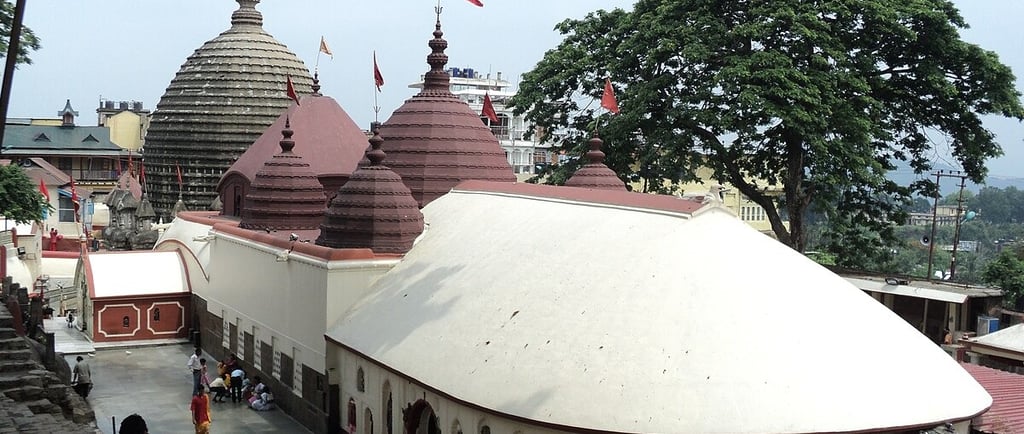
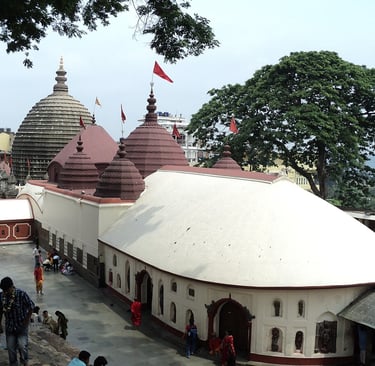
Kamakhya Temple in Guwahati is often introduced to outsiders as a site of tantric mysticism and divine femininity, its fame peaking every year during the Ambubachi Mela—when thousands gather to mark the goddess’s annual menstruation. But visit on an ordinary day, and the narrative is quieter, humbler, and deeply human.
I arrived early, long before the sun touched the temple's domes. Pilgrims were already queuing, barefoot on cool stones, clutching hibiscus flowers and brass vessels of milk. The air smelled of ghee, incense, and the breath of anticipation. At the outer gate, a woman in a red sari sat stringing flowers. I asked her if she came daily. "Every morning," she said. "She wakes with me. So I come to greet her." Her fingers moved rhythmically, tying marigolds with a precision born of habit, not haste.
Inside, the temple didn’t shout. There were no grand murals or towering idols. Just the steady hush of devotion. The sanctum, shaped like a cave, houses not a statue but a rock yoni—a symbol of the goddess’s generative power. Water trickles through it, soft and steady. People touch the stone, bow low, pour milk, whisper their wishes. It felt less like worship, more like returning.
A priest, perhaps in his thirties, stood nearby folding cloths. I asked if I could speak with him. He smiled and nodded. "Kamakhya is not about rules," he said. "She is wild. She is kind. Some come asking for children. Others come simply to cry. All are heard."
He gestured toward a corner where a group of older women sat cross-legged, singing softly. "They are widows from lower Assam. They come here for the sangha—not to pray, but to sit, to sing, to feel company."
As I wandered, I noticed other quiet moments. A young girl lighting a diya and placing it gently at the base of a stone. A couple arguing softly near the gate, then embracing before entering. A vendor handing extra prasad to a child who had dropped his.
Kamakhya is often written about in tones of mystery, blood, and power. And yes, those layers exist. But beneath them is something sturdier and harder to name: continuity. Women come here because they see in the goddess something that sees them back—not as ideas, but as whole, complicated beings.
Before leaving, I returned to the flower-seller. She looked up, smiled, and handed me a garland. "Take it," she said. "For her. Or for yourself. Same thing."
Kamakhya doesn't just reveal. She receives.