The Warrior King and the Bamboo Path: A Hike into Khasi Legend (Mawryngkhang, Meghalaya)
Hike the legendary bamboo trail to Mawryngkhang, the Warrior King of Meghalaya, where Khasi myths echo through cliffside bridges. A cultural journey through courage, love, and living tradition.
MEGHALAYAADVENTURE & ROUTESNATURE & WILDLIFE
6/25/20252 min read
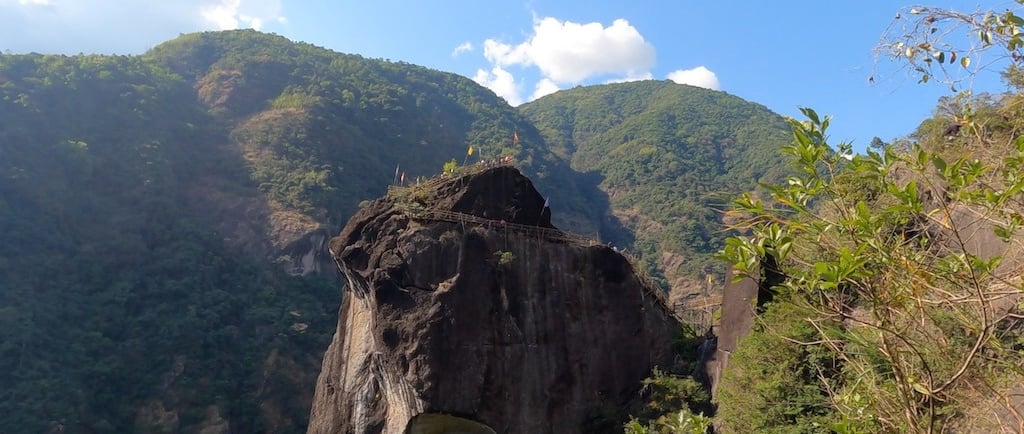
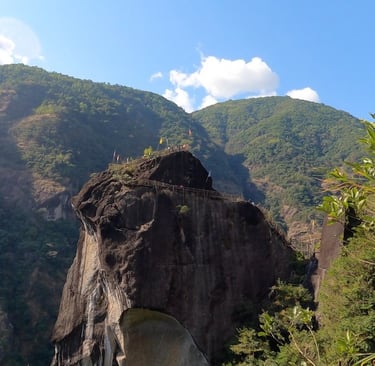
They say the story is older than the bamboo. Older than the cliffs. Mawryngkhang, the King of Stones, was not just a figure of lore but a symbol deeply etched into the Khasi landscape and psyche. Stories about him are told around hearths, passed between generations in songs, and hinted at in the winds that sweep across the cliffs of Wahkhen. They say he towered above all other stones, a sentinel carved by time and love. His strength was unmatched, his heart drawn to Kthiang, a stone of radiant beauty and quiet dignity. But his power attracted rivalry, and Mawpator, another formidable rock-warrior, challenged him not just for supremacy, but for Kthiang’s affection. What followed was no mere quarrel—it was a battle that roared across the hills, that split boulders and made the river tremble. Villagers speak of the earth shaking and a thunder that didn’t belong to storms. Mawryngkhang, though wounded, stood victorious, his scars marking the final stand. Even today, if you look closely at his towering form, you’ll see the gash left by Mawpator’s final blow—a reminder that even kings carry their wounds. And in a gesture of reverence, resilience, and remembrance, the bamboo trail was born—a living path woven by the hands of those who still believe. once the strongest warrior among the rocks.
That’s what our guide, Riban, told us before we began the hike. He wasn’t dramatic, just matter-of-fact. "You’ll see the scar," he said. "But only if you climb."
The trail started from Wahkhen village, a quiet place of orange trees, betel vines, and the rhythm of children’s laughter. We bought oranges from a woman who lived just off the path. She smiled, said, "Go slowly. The king waits."
At first, the walk was gentle. A forested path, then a series of stone steps. But soon, we reached the first bamboo bridge. Tied by hand with cane and rope, it hugged the side of the cliff. Below, the river churned like a beast waking up. The bridge creaked under my feet. I looked at Riban. He nodded. "Hold the cane rail. And trust."
With each step, the legend felt closer. Every sway of bamboo echoed the warrior’s journey—bold, trembling, forward. We passed corners where the rock jutted out like fists. At one point, Riban stopped. He pointed to a deep groove in the cliff wall. "That’s where Mawpator struck him. He didn’t fall. He climbed higher. Always higher."
The climb got steeper. Bridges grew narrower. At times, they were just ladders lashed to the cliff. My breath shortened. My hands gripped tighter. I thought of Mawryngkhang, scarred and stubborn, refusing to retreat.
At the summit, the wind greeted us first. Then came the sight—the massive upright rock that locals call Mawryngkhang. He stood alone at the edge, looking out over the forest and mist. His back was to us. His face toward the sky.
We stood in silence. Riban whispered a prayer. I touched the cold bamboo, now still in the wind. "He still watches," Riban said. "And he teaches. Love, pain, pride, fear. It’s all part of the climb."
We descended slowly. The bridges no longer felt like obstacles. They felt like parts of a story that had decided to let us walk inside it.
These aren’t just trails. They are testaments—to myth, to memory, and to the people who keep them alive with every rebuild, every retelling.
Best Time: October to March
Weather: Clear skies, cool air, minimal rainfall
Know Before You Go: The trail is narrow and high; not suitable for those afraid of heights. Use a local guide and wear sturdy shoes.