The story behind Thukpa
From Bomdila bone broth to Tawang veggie bowls, explore Thukpa’s roots, regional twists, and learn where to find the real deal across Arunachal & Sikkim.
FOOD & FLAVOURS
5/29/20252 min read
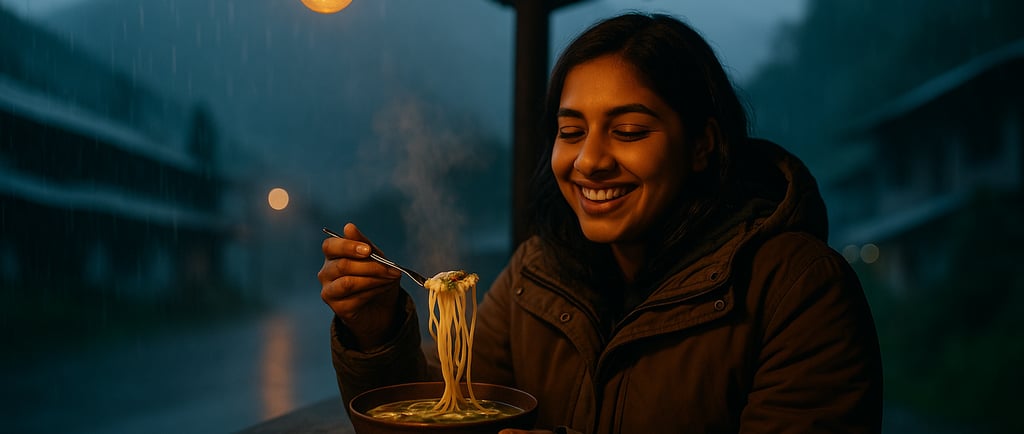
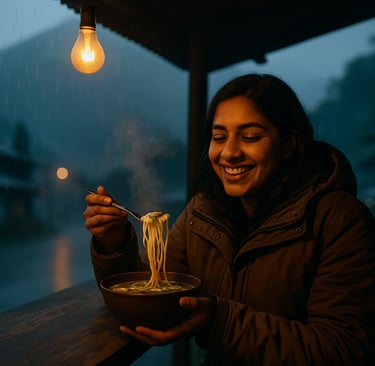
It was a cold, rain-washed evening in Bomdila when I had my first real bowl of Thukpa. The kind that doesn't come in plastic bowls or lukewarm buffet trays, but steaming from a local kitchen, handed to me by a woman who'd been making it her whole life. I was chilled to the bone, my fingers stiff from holding the camera all day, but the moment that broth hit my lips, the world warmed up.
Thukpa is not just soup. It's sustenance, story, and survival. Brought over by Tibetan refugees, it’s become deeply rooted in the cultural fabric of places like Arunachal Pradesh and Sikkim. Each community has shaped it in its own way—some versions heavy with meat and heat, others light, almost medicinal. What stays constant is the comfort it brings.
In Bomdila, the Thukpa had a bone broth base, cloudy and rich, with hand-pulled noodles that had just the right chew. There were slivers of radish, bits of mutton, and a punch of green onion. The woman, Tashi, told me her mother taught her how to make it during the harsh winters when fresh produce was rare and every ingredient had to matter. She still uses mountain herbs in hers, for heat and health.
Traveling through the hills, I began to notice the variations. In Tawang, it leaned more Tibetan—simpler, often vegetarian, served with momo chutney on the side. In Gangtok, it had more vegetables, sometimes even bits of fried egg or local sausage. The flavors told stories: of migration, adaptation, resilience.
Thukpa isn’t fast food. It’s food that waits for you, that welcomes you. Sitting beside strangers on benches, slurping noodles, there’s a kind of camaraderie that builds quietly. No one talks too much. But everyone eats well.
If you’re planning to seek out Thukpa for yourself, here’s how to do it right:
When to Go: Late autumn to early spring is best, when the cold heightens the experience.
Where to Eat: Skip the big restaurants. Look for family-run eateries or roadside shacks in Bomdila, Tawang, or Gangtok.
What to Try: Ask what’s fresh. Go for the local version—mutton in Bomdila, egg and veggie in Gangtok, Tibetan-style in Tawang.
Etiquette: Be respectful. These are often humble places. Greet the cook, return your bowl, and thank them.
What to Buy: You can find dried noodles or spice mixes in local markets. Ask how to use them before you go.
What to Avoid: Don’t assume every place labeled "Thukpa" will serve the real deal. Chain restaurants often miss the soul.
There’s a quiet wisdom in a good bowl of Thukpa. It doesn’t shout for attention. It doesn’t need to. You just have to show up, hungry and open-hearted, and let it do its work.