Rice, Rivers, and Smoke: Flavors That Define Assam
Explore the soul of Assamese cuisine through rice, mustard, fermented flavors, and firewood-smoked meats. A sensory journey across land, river, and memory on every plate.
ASSAMFOOD & FLAVOURS
6/18/20252 min read
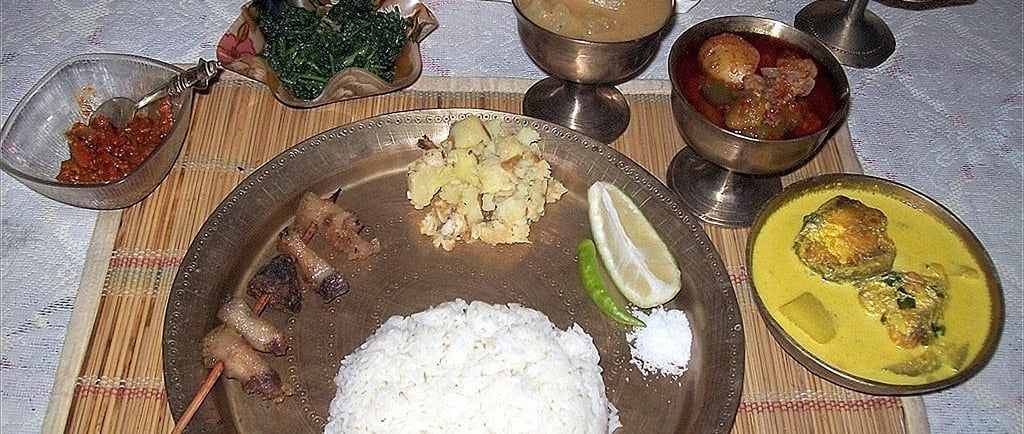
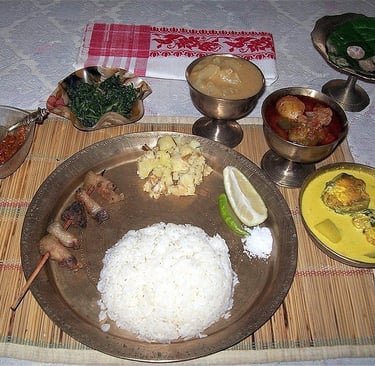
In Assam, food doesn’t shout. It simmers, seeps, and lingers. It’s in the steam rising from a plate of joha rice, the tang in a bowl of tenga, the slow depth of smoked pork cooked over firewood. To eat in Assam is to taste land, water, and weather—as if the river itself has seasoned the plate.
The first thing that strikes you is the rice. Not just how much of it, but how varied. There’s joha, aromatic and soft. There’s bora, sticky and perfect for pithas. There’s bao, red and nutty, often fermented into apong. Rice isn’t a side. It’s the main character. Everything else—the greens, the fish, the meats—arrives in service of it.
And then there is khar. You hear the word often, almost whispered. Khar is both ingredient and idea—an alkaline extract made by filtering water through sun-dried banana peels or ash. It is cleansing, it is ancestral, and it is unlike anything else. Served often with raw papaya or pulses, khar is how many Assamese meals begin. It is bitter, yes, but also grounding—a palette reset from the land itself.
Mustard makes itself known next. In oil, in seed, in greens. Aloo pitika—a mashed potato side dish—is elevated with just a drizzle of pungent mustard oil and a pinch of salt. Xaak, or wild greens, appear in various forms: blanched, stir-fried, soured with tenga. They tell you the season. They tell you who picked them. They often tell you where they were cooked.
And then there is fish. Rivers run through Assam, and so does fish—small, bony, freshwater kinds like rou, mrigal, or hilsa. Often cooked in light broths with tomatoes or elephant apple, sometimes fried crisp in mustard oil. But also dried, fermented, and added to chutneys that pack more history than heat.
Smoked meats, especially pork, come mostly from Upper Assam and the hill areas where tribal communities live. Smoked pork with bamboo shoot is a staple. Its smell is unmistakable: earthy, sharp, and welcoming. It speaks of long winters, fire kitchens, and food that waits. The first time I had it was in a home near Dibrugarh. The cook, a woman in her sixties, told me she learned to smoke meat from her grandmother. “Wood should be from jackfruit tree,” she said, “not just any branch.”
In Assam, food isn’t performance. It’s practice. It’s preservation. It is how people remember, how they mark time, how they make strangers feel like family. At a Bihu meal in Majuli, a man served me pork curry and handed me a glass of rice beer. “Eat,” he said. “Today, you’re not a guest. You’re in the story.”
And that’s what Assamese food really is. Not just taste, but story. Not just ingredients, but inheritance. It is rice, rivers, and smoke—together, on a plate.