Postcards from the Plantation: My Day in Assam’s Tea Heartland
Step into the lush tea gardens of Dibrugarh for a day of golden light, warm chai, and the quiet rhythms of plantation life. A photogenic journey through Assam’s iconic tea heartland.
ASSAMTHINGS TO DO
6/22/20253 min read
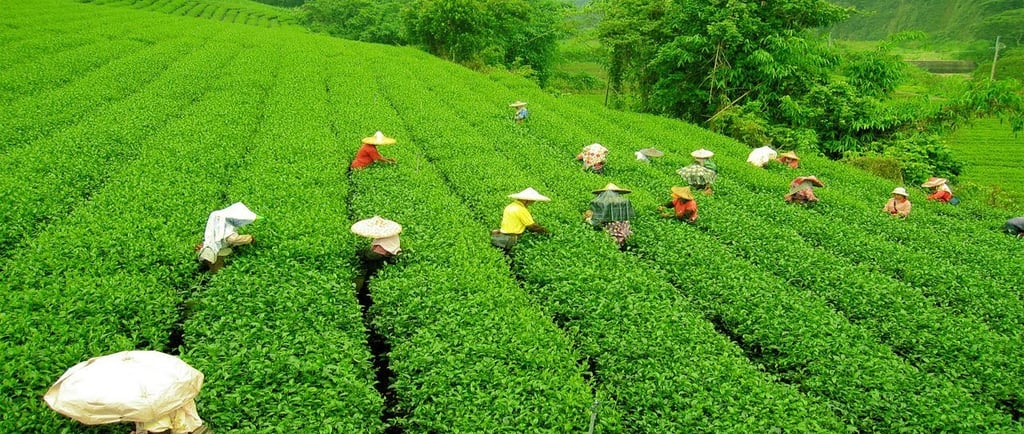
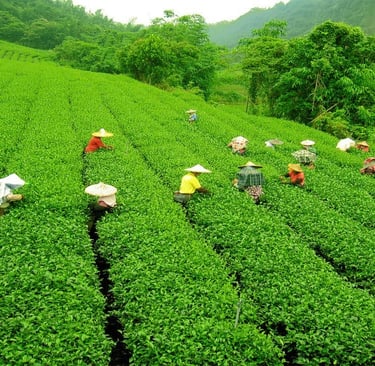
I woke in Dibrugarh to a sky streaked with early light and the faint, earthy scent of dew on tea leaves. From the balcony of the bungalow where I stayed—a colonial-era planter's house turned guest lodge—the gardens rolled out like waves. Perfectly trimmed rows of green stretched to the horizon, where mist still clung like a second sky. In that morning stillness, even the birdsong seemed hushed, as if waiting for the day to begin.
By 5:45 a.m., the estate began to stir. A slow trickle of workers arrived on foot and bicycle, many chatting softly, others in silent routine. The tea bushes, waist-high and endlessly uniform, seemed to welcome them. At 6 a.m., the plucking began. Women in bright headscarves, baskets slung across their backs, moved between the rows like part of the landscape itself. Their hands worked fast, but their movements carried grace. I followed one team through the garden, careful not to disturb the rhythm. "We start early, before the sun is harsh," one of them told me. Her name was Anjali. She posed shyly for a photo, fingers mid-pluck, and laughed when I showed her the frame. "Make sure you get the sunrise. That’s when the leaves are soft."
We paused for a short break near a narrow trail where someone had set up a makeshift tea stand—a boy barely in his teens serving up milky chai from an aluminum kettle. "My father picks. I serve," he said with a grin.
Later that morning, I joined a tour of a nearby tea factory. The smell of withering leaves and damp wood hit me the moment I stepped inside. Machines hummed, clattered, and steamed as fresh green transformed into fragrant black. Our guide explained oxidation, rolling, drying—all the steps that give Assam tea its bold flavor. A worker stirred huge trays with a wooden paddle. "Every batch tastes different," he said, "depending on the rain, the soil, the hand that picks it." In a corner, a technician tested the moisture level of a new batch. The room was warm, filled with the low music of labor.
By noon, I was back at the bungalow for a tea tasting on the veranda. There were six cups lined in a row—from malty second flush to rare white tea. Each sip tasted like the land itself: robust, slightly wild, grounding. The manager pointed to a distant hill. "That’s where our oldest section grows. Over a hundred years old. It’s like tasting history." A staff member brought out jaggery-coated snacks to pair with the teas, and we talked about how changing weather patterns were affecting harvests. "The tea changes like we do," she said. "No year is ever the same."
In the afternoon, I wandered alone through the garden. The light had changed—softer now, golden, brushing each leaf with fire. A dragonfly landed on my wrist. The wind barely moved. It was that quiet. I walked along a dirt path where butterflies hovered over wildflowers, and paused near a pond where tea workers sometimes washed their hands and faces. One elderly picker nodded at me as she passed, her basket nearly full. The field was quieter now, more introspective.
By 4:30, a group of schoolchildren walked past the garden’s edge on their way home. Some of their parents worked the fields; others helped in the factory. I struck up a conversation with a teenager named Raju who wanted to be a tour guide someday. "Tourists come for the photos," he said. "But I want them to leave knowing what the tea really means."
As dusk settled, I joined the workers at a small tea stall near the edge of the plantation. Chai steamed in thick glass cups. A few laughed over radio songs. Anjali waved as she passed by on her bicycle. "Same time tomorrow," she called. Someone turned on a bulb strung from a pole, casting a yellow halo over the cups.
By 5 p.m., golden light slipped through the camellia bushes. A breeze moved the green like waves. I breathed it in and thought: this isn’t just a place to photograph. It’s a place that photographs you back—quietly, in color, with light that remembers.
I walked back slowly, the horizon now a line of fading gold. Behind me, the plantation exhaled. The day had ended, but its warmth stayed with me, like tea cooling in a ceramic cup—waiting, not forgotten.