Not a Tourist Spot: Entering Mawphlang with Permission, Not a Ticket
Step inside Mawphlang Sacred Grove, a Khasi forest where belief isn’t explained—it’s remembered. More than a tourist stop, it’s a quiet invitation to listen, not just look.
MEGHALAYAFEATURED STORIES
6/15/20253 min read
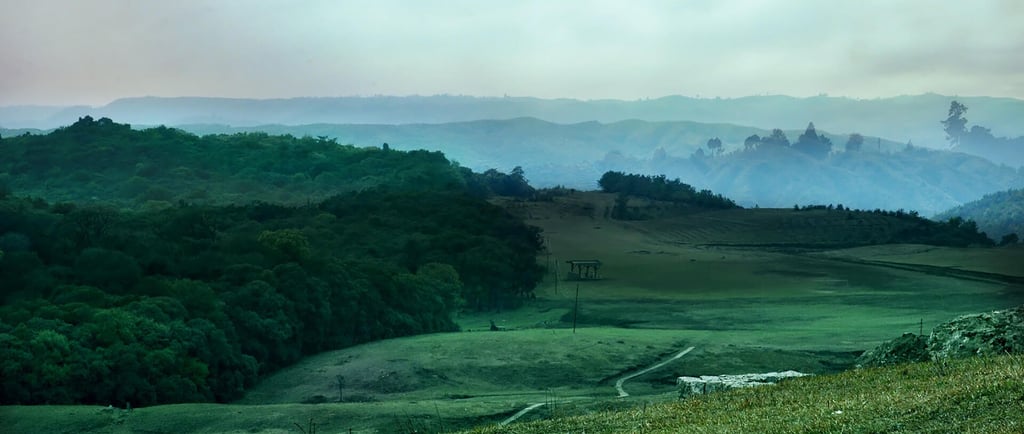
There are forests you walk through. And then there are forests that walk through you. Mawphlang Sacred Grove, just an hour outside Shillong, belongs to the latter. It’s not a park. Not an attraction. It’s a living shrine—a place where the Khasi people have, for centuries, practiced a faith without scripture, rooted in reciprocity with the land.
I arrived late morning, the sun already warming the stone path that led toward the grove. At the gate stood my guide, a soft-spoken man in a windcheater and sandals. He didn’t talk much at first, and neither did I. We entered quietly, almost like stepping into someone’s home uninvited.
The change was immediate. Temperature dropped. Light filtered green. The path narrowed between massive trunks wrapped in old moss and vine. My guide finally spoke: “You must not take anything from here. Not even a leaf.”
I nodded. But this wasn’t just about rules. This was a covenant. The forest wasn’t sacred because someone had declared it so. It was sacred because people treated it that way, generation after generation. They asked permission before rituals. They offered thanks before leaving. No timber is cut. No fruit is plucked. The forest thrives because it is allowed to be.
We stopped by a clearing where monoliths stood in clusters. "This is where the clan elders used to gather," he said. "We don’t have temples. The forest is our altar." A patch of sunlight spilled onto a stone that looked worn from centuries of rain and reverence.
We sat on the edge of that clearing for a while, not saying much. He pointed out trees by name, each one associated with certain clan myths. One, he said, was known to house the spirit of a matriarch who had once healed with herbs. People still come to sit near it, seeking guidance. Another had been struck by lightning decades ago but never split. "She chose to stay whole," he said, as if explaining a friend's decision.
Birdcalls came from somewhere deep. The air carried no wind, but it pulsed with presence. There’s no signboard in Mawphlang telling you to be quiet. But the forest silences you anyway. Even my breath slowed. The usual inner chatter—the traveler’s checklist—faded into something like reverence.
As we walked, the guide shared stories—of sacrifices made during plague, of rituals for good harvest, of how once, when someone tried to take a branch from the grove, illness followed. He wasn’t trying to impress. Just telling what he knew.
We passed a tree where the bark was worn smooth at shoulder height. "That’s where offerings are tied," he explained. Pieces of red thread, cloth, even betel nut leaves had been left there. It wasn’t dramatic. Just quiet testimonies to faith.
Halfway through, we met a Khasi woman in her fifties sitting on a low rock. She was dressed simply, her hair tied back, a thermos beside her. She greeted us with a nod. "I come here sometimes when my heart is noisy," she said. "Here, it quiets."
Later, outside the grove, I asked my guide if younger people still believed in its sanctity. He looked at me for a moment and then said, "Belief is not taught. It’s remembered. As long as the forest stands, people will remember."
I thought of how easy it is to label places like this "offbeat" or "hidden gems"—terms that flatten them into hashtags. Mawphlang doesn’t want that. It doesn’t want your Instagram reel. It wants your respect.
Back in the light and chatter of waiting vehicles, I didn’t feel triumphant. I felt small, in the best way. Like something older and wiser had granted me a brief audience.
Mawphlang isn’t a destination. It’s an invitation. And you don’t buy your way in. You walk gently. You listen. And if you’re lucky, it listens back.