More Than Pork and Bamboo: What Mizo Food Teaches You About the Land
Experience the soul of Mizoram through its simple, sustainable cuisine rooted in hill ecology and tradition. From bamboo shoots to smoked pork, every bite tells a story of land, resilience, and quiet hospitality.
FOOD & FLAVOURSMIZORAM
6/29/20253 min read
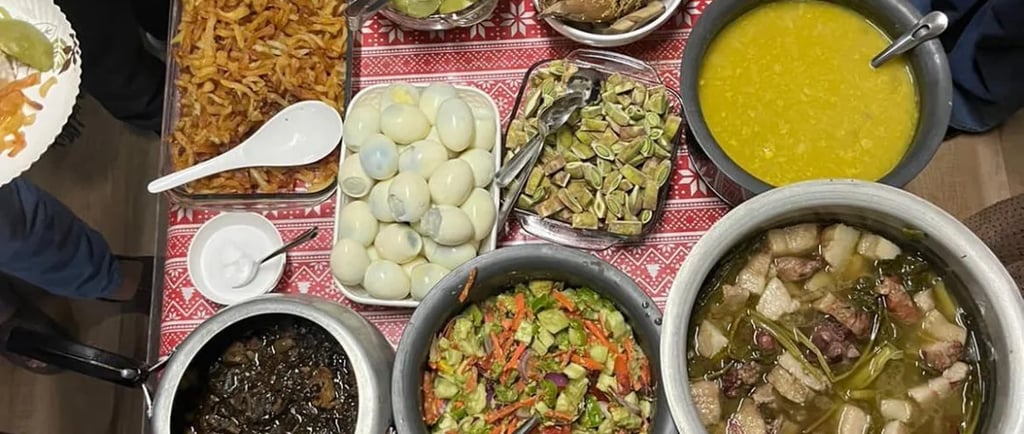
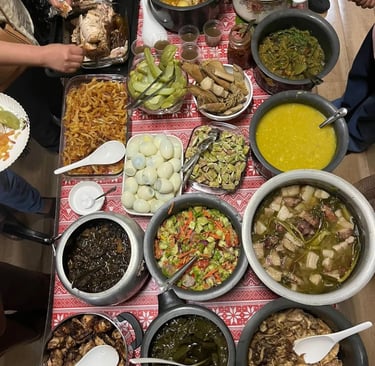
They don’t fry much in Mizoram. They steam, they smoke, they stew. It’s food for bodies that walk hills and hands that plant by moonlight. Meals here are not just sustenance; they are a philosophy—of doing more with less, of living gently in a landscape that doesn’t forgive excess.
On my second morning in Aizawl, I walked into a small eatery tucked between a pharmacy and a tailoring shop. No signboard, no menu, just the smell of wood smoke and fermented bamboo. The benches were wooden, the lighting dim, the rhythm of ladles against steel plates soothing. A young man behind the counter handed me a metal plate with rice, bai (a vegetable stew), and a generous chunk of smoked pork. “Nothing fancy,” he said. “Just lunch.”
But it was more than that. The pork had been smoked for days, possibly weeks, using firewood gathered from nearby forests. The bamboo shoots in the bai were foraged that week, cleaned and boiled down with mustard greens until they surrendered their bitterness. The rice was slightly sticky, fragrant, the kind that fills both the belly and the house. No ghee. No heavy oils. Just salt, fire, and patience. The kind of meal you eat with your whole being.
Mizo cuisine isn’t built for indulgence—it’s built for sustainability. In the hills of Mizoram, where transporting ingredients is difficult and weather often dictates menus, cooking techniques are practical and rooted in ecology. Smoking isn’t a trend here—it’s survival. Steaming isn’t health-conscious branding—it’s heritage. Meals are shaped by the terrain, by the rain, and by traditions that prize preservation over presentation.
Later that day, I met an older woman named Laldiki in the outskirts of Aizawl who invited me into her kitchen after we chatted at a market. She was making bekang—a fermented soybean paste—by hand. “This keeps for months,” she told me, “and gives strength in winter.” She explained how the beans were boiled, sun-dried, wrapped in banana leaves, and left near the hearth for fermentation. The smell was pungent but not unpleasant, earthy and oddly familiar.
The hearth was everything. A constant low fire warmed the kitchen, dried herbs hung from wooden rafters, and small clay pots simmered quietly in corners. Children played nearby, occasionally lifting the lids to sneak tastes. When I asked about spice, she laughed. “We don’t burn our mouths. We warm them.”
Most meals in Mizoram revolve around what’s available, not what’s desired. Foraging still plays a role. Seasonal vegetables—mustard greens, squash, wild ferns, yams—show up in everyday dishes like bai or chutneys made from roasted chili and sesame. On lucky days, you’ll get ema (chili) boiled with dried fish and herbs. On others, just a plate of plain rice with hot tea. Even that tea, often made with local leaves, tells its own story.
You begin to notice the textures—how the food is soft but hearty, mild but layered. Meals are eaten quietly, usually without dessert or ceremony. The hospitality isn’t loud, but it’s present in the way your water glass is refilled, or the extra ladle of stew that arrives when you pause mid-meal.
One evening in Lunglei, a town further south, I joined a group of teachers eating at a roadside shack. The menu was predictable: smoked beef, bai, chutney, rice. But as the conversation unfolded—about crops, school curriculums, and roads washed out by rain—it became clear that the food wasn’t the highlight. It was the pause, the moment of togetherness, the shared understanding that a meal doesn’t need to impress to be meaningful.
There’s humility in this food. It doesn’t try to dazzle. But if you sit down, eat slowly, and listen to the stories behind each ingredient, it begins to tell you about the land: about self-reliance, thrift, quiet joy, and a rhythm of life shaped more by seasons than by schedules.
So if you find yourself in Mizoram, don’t go looking for spice-laden curries or Instagrammable platters. Walk into a local stall. Order the thali. Ask a question. And if you’re lucky, someone will sit down next to you and explain what each bite means—not just to them, but to a way of life carved into the hills. Food, here, is never just food. It’s memory, ecology, and belonging, all served warm.
Image Credit: Reddit