Fragments of a Forgotten Kingdom: A Day at Pilak
Step into the quiet ruins of Pilak in Tripura, where Buddhist and Hindu sculptures lie half-buried in earth and memory. A narrative journey through one of Northeast India's most overlooked archaeological gems.
HISTORYTRIPURA
6/28/20253 min read
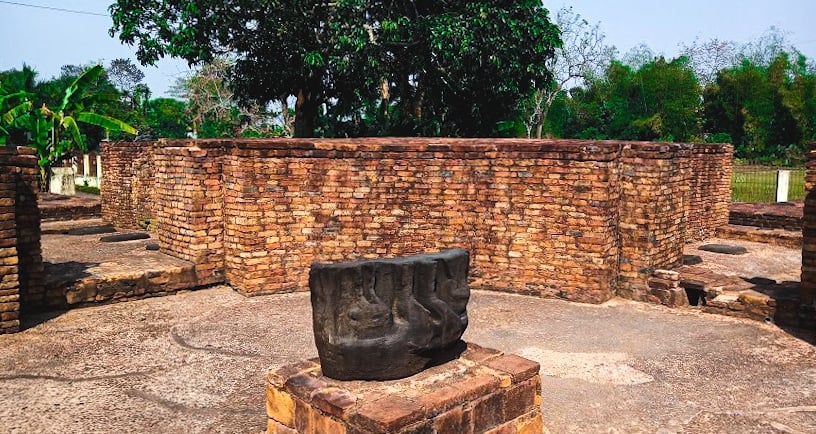
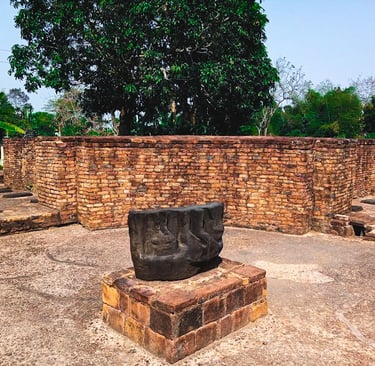
It began with dust. Not the kind that clings, but the kind that settles—softly, patiently—over centuries. Pilak, in South Tripura, isn’t a place that announces itself. There are no grand gates or ticket lines. Just a quiet path flanked by banana groves, with time hiding under each leaf. The sun falls thick here, and the silence is broken only by the rustling of palm fronds or the distant cough of an engine from a nearby hamlet.
My guide, a wiry man named Ratan, met me near a corrugated-roof museum that looked more like a storage shed than a state-protected site. He had a rolled-up umbrella, a faint limp, and a memory full of stone. “You want to see the sleeping gods?” he asked in his broken Hindi, with a smile that carried both pride and fatigue.
The walk to the main site was short but slow. Ratan stopped often—not out of fatigue, but reverence. “Here,” he said, pointing to a partially buried sculpture. “Balarama, maybe. Or Avalokiteshvara. No one’s quite sure anymore.” He bent down, brushed the surface with his hand, and added, “Each year, the rains reveal more.”
Pilak isn’t about certainty. It’s about cohabitation. Between the 8th and 12th centuries, this patch of Tripura was a flourishing center of Buddhist and Hindu art, influenced by the Pala and Gupta styles. But unlike other sites where one tradition dominates, Pilak reflects a rare pluralism. Shaiva and Vaishnava deities share the space with Bodhisattvas. Their styles intermingle. No stone here insists on a single truth.
At the main mound, the earth breaks to reveal a sandstone Vishnu with eyes long rubbed smooth. Nearby, a carved panel—half buried, half breathing—shows a meditative figure surrounded by lotus petals and mythic creatures. “They say this one protected rice fields,” Ratan said. “Even now, farmers leave flowers after harvest.”
We lingered near a fallen sculpture of a deity with an elephant torso and a monk’s serenity. “Is it Ganesha? Is it a guardian?” I asked. Ratan smiled again, this time slower. “It’s someone’s god. That’s enough.”
Further along, we stopped at a depression in the earth where villagers had once uncovered another idol—accidentally, while digging for tubers. The local elders called it 'Thakur Than', a sacred spot without denomination. Now, people from nearby villages still come here to light incense and leave coins, even though they don’t know the deity’s name. It’s faith without formality.
There’s something humbling about Pilak. Unlike Khajuraho or Sanchi, it doesn’t flaunt. It doesn’t draw tour buses or selfie sticks. The sculptures lie exposed to rain, moss, and quiet decay. Some are still unearthed each year when the monsoons shift the soil. “That hill,” Ratan said, pointing to a nearby rise covered in grass, “we think more idols are under it. But the earth decides when we see them.”
We ended our walk at the modest museum. Inside, a few better-preserved artifacts stood under glass: a dancing Shiva, a four-armed deity whose name was lost, a Buddha in bhumisparsha mudra—fingers brushing the earth, calling it to witness. A child ran through the corridor, scattering light from an open door. It felt less like a museum and more like a room waiting to be remembered.
On our way back, Ratan paused by a large stone fragment leaning under a jackfruit tree. “Some say this was a temple wall,” he said. “Others say it was part of a school. I just think of it as something that saw things we’ll never know.”
“Pilak was a kingdom,” Ratan said softly. “Not like those in books. It was a kingdom of stone and stories. And it’s still speaking. You just have to be quiet enough to hear.”
Travel Notes:
Location: Jolaibari, South Tripura (close to Udaipur)
Best time to visit: November to February (cool and dry; ideal for walking and photography)
How to reach: The nearest airport is Agartala. From there, hire a car or take a shared jeep to Jolaibari. Local transport is sparse—plan ahead.
What to carry: A wide-brimmed hat, reusable water bottle, notebook if you’re the kind who likes to sketch or jot things down. There are no snack stalls here—just shade and silence.
Etiquette Tip: Avoid stepping on or climbing any sculpture, even those lying flat. They are not debris—they are fragments of memory.
Pilak doesn’t teach through placards. It whispers through cracks, through caretakers, and through the unguarded awe of those who listen. And if you stay long enough, the silence will start to make sense.