Echoes of the Sacred: 7 Festivals That Reveal the Heart of Northeast India
Explore seven traditional festivals in Northeast India that go beyond performance—each a deep expression of land, spirit, and community memory. A cultural journey into rituals, resilience, and living heritage.
CULTURE & HERITAGEEDITOR'S PICKS
6/13/20254 min read
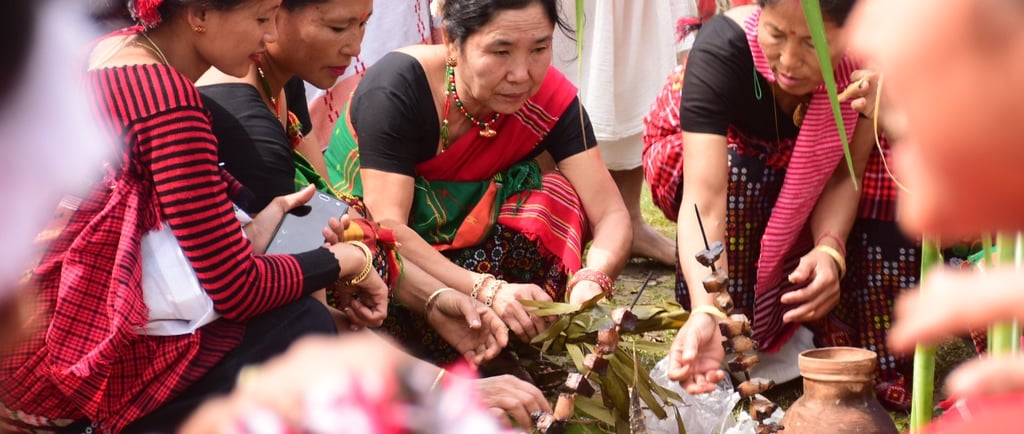
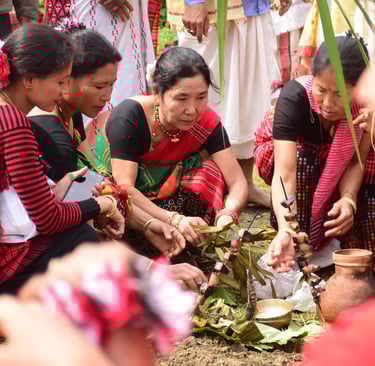
Travelers often arrive in Northeast India during a festival, camera in hand, drawn by the promise of color, drums, and dance. What they often miss is what lies behind the rhythm—the quiet labor, the seasonal wisdom, the collective healing. These aren’t performances for outsiders. They’re deeply rooted expressions of life, memory, and belief. To truly witness a festival here, you have to look past the spectacle. You have to listen.
1. Myoko (Apatani, Arunachal Pradesh)
When to visit: March
At first glance, Myoko in Ziro seems like a village-wide party. There's rice beer, community feasts, and rituals that stretch for weeks. But for the Apatani, this is a spiritual realignment. Families perform elaborate rituals led by shamans, praying for fertility, protection, and purification.
Preparations begin months in advance, and every household plays a part—from brewing beer to weaving ceremonial garments. Shamans recite intricate chants that have been passed down orally for generations, and the entire village participates in the staging of the rites. There are no spectators here. Everyone plays a role. Children learn by watching; elders teach by doing. The rituals, though communal, are intimate acts of devotion.
2. Wangala (Garo, Meghalaya)
When to visit: November
Known as the "100 Drums Festival," Wangala marks the end of the harvest for the Garo people. It’s rhythmic and powerful, with men and women dancing in perfect timing to long wooden drums. But Wangala is not just post-harvest joy.
In the days leading up to it, homes are cleansed, tools are polished, and granaries are decorated. It is a festival of thanksgiving to Saljong, the Sun God, but it is also about community cohesion. Priests, called Nokmas, perform ancestral rites in the dark corners of homes and sacred spaces. It’s a time when oral histories are retold beside fires, and youths learn what it means to carry forward not just crops, but identity. Wangala is movement, yes—but its pulse is memory.
3. Chapchar Kut (Mizo, Mizoram)
When to visit: Early March
Held after the labor of clearing bamboo forests for jhum cultivation, Chapchar Kut is a time to rest, laugh, and reclaim joy. It is not a tourist invention. It is a cultural exhale after the burn.
The days leading to the festival are spent in communal preparation—women brewing zu (local rice beer), young men rehearsing dances, families preparing pork-based delicacies. The bamboo dance, cheraw, is mesmerizing not just in rhythm, but in how it reflects Mizo coordination and unity. Elders share stories from past Kuts, recounting both hardships and resilience. Chapchar Kut is about honoring labor with laughter. It is about celebrating the land without taking it for granted.
4. Reh (Idu Mishmi, Arunachal Pradesh)
When to visit: February
Reh is not easy to access or photograph. And that’s partly the point. For the Idu Mishmi, it is a festival of appeasement, held to honor Nanyi Intaya, the supreme deity. Rituals can last days, and the preparations are intense.
Men and women spend weeks gathering ceremonial items—bamboo, dyed textiles, herbs, and livestock. The rituals are led by igu, or shamans, whose role is both spiritual and social. During Reh, villagers come together not just to watch, but to participate in a deeply immersive experience. Illnesses, familial discord, or poor harvests are interpreted as imbalances that need addressing. Through prayers and sacrifices, harmony is restored. For the Idu Mishmi, Reh isn’t a performance. It’s a communal act of healing.
5. Ali-Aye-Ligang (Mishing, Assam)
When to visit: February (first Wednesday of Phagun)
Celebrated during the first Wednesday of Phagun (February), this spring festival marks the sowing of seeds. Youths perform the Gumraag dance, moving in circles like the cycles they pray for. But beneath the grace lies agricultural intent.
The festival begins with the symbolic sowing of paddy, led by village elders. Special food is prepared—purang apin (packed rice), fish cooked in banana leaves, and apong (rice beer). Dances and songs are performed not just for entertainment, but as oral archives of agricultural knowledge. Parents use the day to teach children how to respect the land, how to read the skies, and when to plant. Ali-Aye-Ligang is about continuity, not nostalgia. It is a practical prayer for future abundance.
6. Losar (Monpa, Arunachal Pradesh)
When to visit: February or March (varies by lunar calendar)
Losar, the Tibetan New Year, as celebrated by the Monpa people, is rich with chants, butter lamps, and community meals. But at its heart is a cleansing.
In the days leading up, households repaint walls, discard old clothes, and settle disputes. The idea is to start the year with no karmic baggage. Monasteries host Cham dances—masked performances that symbolize the battle between good and evil. Families visit each other, offering khadas (ceremonial scarves) and sharing momos and thukpa. Losar is not a single-day event, but a layered ritual calendar. It teaches the value of letting go and beginning again.
7. Hornbill Festival (Multiple Tribes, Nagaland)
When to visit: December 1–10
Often called the "Festival of Festivals," Hornbill has grown into a curated spectacle showcasing Naga heritage. But dig deeper, and you'll find fragments of fading rituals being reclaimed.
Each tribe’s morung (traditional youth dormitory) is recreated on-site, and within them, elder storytellers share folktales that would otherwise fade. For many older Nagas, Hornbill is a bittersweet convergence. It’s where former headhunter tribes tell stories to youth who’ve never seen a village feast. It’s where war songs are sung not to prepare for battle, but to remember a time when survival depended on unity. Behind the stage lights and stalls lies a quiet urgency—to remember before forgetting takes over.
These festivals are not backdrops. They are living texts—epic poems written in song, sweat, and shared memory. To witness them is to step into a community’s heartbeat. So if you go, don’t just dance. Listen.