A Morning on the Floating Forest: Birds, Phumdis, and the Last Sangai
Explore Keibul Lamjao, the world’s only floating national park, through a morning of birdwatching, phumdis, and a rare sighting of the endangered sangai deer. A soulful journey into Manipur’s wild heart.
NATURE & WILDLIFEMANIPUR
6/17/20252 min read
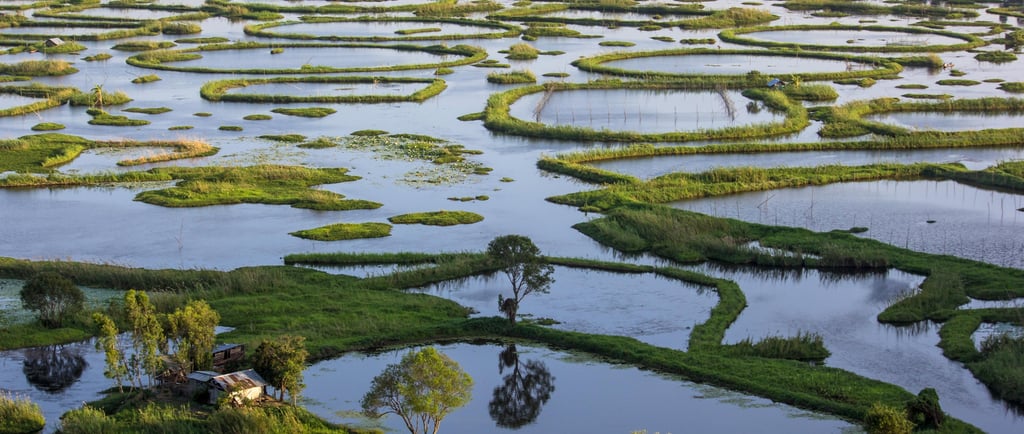
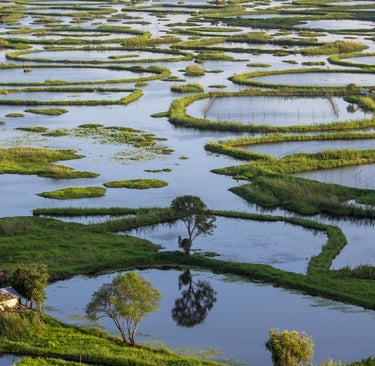
Keibul Lamjao isn’t just a national park. It’s a living, swaying contradiction. A forest that floats. A lake that holds deer. A landscape where birds skim over water that breathes. I arrived before sunrise, when the sky was still bruised with sleep and the lake was quiet enough to hear every flap, every rustle.
A local guide met me at the edge of Loktak Lake. We climbed into a long wooden boat, narrow and low to the water. He pushed us off with a bamboo pole, and the first thing I noticed was the softness of the ride. The lake’s surface was layered with phumdis—mats of vegetation so thick they hold up deer and even people, yet porous enough to breathe. “This is the only place like it,” he said, paddling slowly. “We call it the floating forest.”
Birds were already awake. A pair of bronze-winged jacanas stepped delicately across the phumdi, long toes barely denting the surface. Their movement was slow, careful—like a lesson in how to exist without taking too much. In the reeds, warblers chirped. A purple heron rose suddenly from the shallows, its wings slicing silence.
Further in, we saw them: pied kingfishers, a pair of lesser whistling ducks, and the flash of a white-breasted waterhen. The guide stopped the boat. “Now listen,” he said. No more paddling. Just air, water, and wing.
Then he whispered, “Look there.”
At the edge of a distant phumdi, something moved. Not a bird this time, but the flicker of antlers. The sangai—Manipur’s endangered brow-antlered deer. I held my breath. The deer moved slowly, each step sinking into the floating mat, yet balanced with ancient grace. “He is special,” my guide said. “They say he dances on the forest.”
Keibul Lamjao is the only place on Earth where sangai still roam. Once thought extinct, they were rediscovered here in 1951. Today, they number barely a few hundred. Every year, floods, encroachment, and human pressure shrink their fragile home.
The locals know this. Many have turned protectors. We later passed a group of young volunteers repairing a bamboo walkway. “We’re not just saving deer,” one said. “We’re saving ourselves. Our way of life.”
Back on shore, I asked the guide if the birds ever leave. “Some do,” he said. “Migratory. But many stay. They like places where the world isn’t in a hurry.”
Neither was I. That morning, between the birds, the swaying phumdis, and the rare glimpse of the sangai, I realized that Keibul Lamjao doesn’t offer sights. It offers presence. And if you sit still long enough, it lets you belong—if only for a moment.